
Disclaimer

The ideas, views and opinions expressed in here in blog or comments and profile represent my own views and not those of any of my current or previous employer .They are based and taken from regulatory guidance available freely and my interpretations from my experience.

Sunday, 3 January 2016

Writing Medical assessment in Pharmacovigilance


With changing times, it is said that we have lost a lot of our attention span and this if applied to our reading, makes us to read something quickly and come to conclusion. 


This is exactly what physicians, health authorities, responsible HCP (Healthcare Professionals) want to read when they read adverse event report preferably CIOMS/MedWatch. They just want to get idea regarding the reported adverse event and the suspect drug and what does the company's position is on this.

Medical assessment is known as company comment, sponsor comment, MAH comment and so on  but in this blog we will term it as medical assessment.The medical assessment or sponsor assessment or company comment is exactly the place where you will find this information.


What is medical assessment?

This is short description (generally not more than 4 to 5 sentences) regarding Sponsor's position with respect to the reported Adverse Event (AE) and Sponsor's suspected products and its relationship to AE in a very brief and conclusive way.


Who should write it?

Many Sponsors* and Regulatory authorities* prefer safety physician’s i.e certified medical doctors to  write it especially for Clinical Trials (CT) and Serious cases. However non serious and post marketing adverse event reports can be handled by experienced pharmacovigilance individuals who are not medical doctors per se but are HCP’s with proper training and expertise. In fact, regulatory guidelines are also not stringent regarding requirement of only medical doctors to write medical comment for all cases in PV , and same is being followed widely in industry.

Prerequisites for writing a comprehensive company comment:
·         Know the safety profile of drug- Refer to IB,RMP,SmPC,PIL .This helps to understand the mechanism of action and safety profile of suspect product in relation to the reported event.
·         Causality assessment- It is a topic, that will be explored in detail in another blog. However the important prerequisite is that causality assessment has to be done so you know your position as to is it a related or not to suspect product. This helps in writing sponsor assessment so that you know how and what to write. 
·         Know the clinical presentation of the event, it is important to know the disease pathophysiology, risk factors etc so as to explain the event and correlation to drug.
·         Know the time to onset/Latency (temporal relationship of the event and product).
·         Knowing safety profile of other concomitant medications. This is not always very easy, especially in patients when conmeds are reported as none or many. The trick is first go by class of drugs and then download the SmPC/PIL/USPI of relevant drugs from company website/RA websites. (You can find such relevant websites on my previous blog)

What and how should it be framed?

Medical assessment is free text field in any Safety database used by Sponsor. Most Sponsors have a standard template to help drafting it.
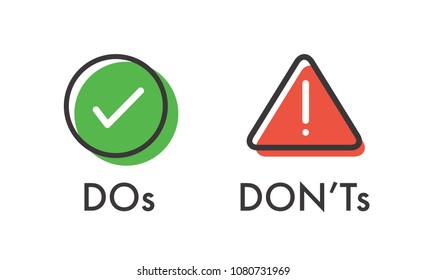

Some common do’s are:

·         Use full generic drug names (i.e. for the active ingredients) only; no abbreviations.

·         If the case is not assessable due to poor documentation, describe what additional information is needed to determine causality. Ensure you send follow up for this missing information.
·         If required, provide reference of case definitions/literature to support the assessment.
·         Provide the statement regarding the current safety profile of drug in relation to current RSI and event (listedness).

Some common don’ts are:

·         Be concise (e.g. do not repeat case demographics which are already mentioned in case narrative i.e age & sex, unless they contribute to the medical assessment)

·         Avoid abbreviations including obvious one’s as well  e.g COPD,DM,URTI,HB etc .

·         Do not include calendar dates but the number of days from exposure to event (e.g. 2 Days after treatment started) i.e latency; it is acceptable to give approximate dates (e.g. after about two months or 2 years when more appropriate)

·         Avoid mentioning unsubstantiated or non-scientific sources to frame sentences
·         Avoid using very definitive and specific terms or personal opinions like it is highly impossible, not at all related etc.
·         Avoid mentioning assessment for other company suspect products when not needed or when data is inconclusive


Take home message : It is important to remember that the medical assessment should make medical and scientific sense and is standardized ( conveying  same meaning to every reader). It is company statement and the writer should remember that it can be challenged during audits/inspections.

*Sponsor/Marketing Authorization Holder/Manufacturer and RA/HA/NRA/CA (Regulatory Authorities/Health Authorities/National Regulatory Authority/Competent Authority) are used interchangeably for ease in blog but have different definition.

 Written by,


Dr.shraddha Bhange.
Connect with me Via comments below, I do not respond to Facebook messages.
Support the cause of better rural education with me:ThinkSharp Foundation http://thinksharpfoundation.org/#home
.


Wednesday, 25 November 2015

Pharmacovigilance knowledge repository

 One of my friend asked my advice for websites or resource for pharmacovigilance knowledge.


So i tried helping him, but i realized there is not enough one stop here we could find this, at least i have not found one. The list is exhaustive and will be updated, but something to start with.

1) Regulatory websites itself-
This websites are great source for enhancing knowledge or refreshing or simply keeping in touch with regulatory updates.If you subscribe to this website then authenticated first hand updates by regulatory bodies will be delivered to you in your mailbox.

FDA for US regulations, EMEA for European regulations, MHRA for UK regulations etc.

1) FDA website is vast storage of knowledge and once you browse it properly many courses and documents are available. If you subscribe there is also an option to subscribe for your domain only at here-http://www.fda.gov/ForHealthProfessionals/StayInformed/default.htm.

I found an important links to FDA where interesting courses are available.

FDA clinical investigator  program.

FDA  course on new drug development-

FDA all stages of dug development program-

FDA all 101 questions-


2) EMEA website-It is very informative and user friendly, navigation is quite easy and finding topics of your intrest  immeidately is easy too
http://www.ema.europa.eu/ema/index.jsp?curl=pages/regulation/general/general_content_000258.jsp

3) MHRA-
UK has its own website dedicated as medicine and health regulatory activities.
Website is very informative, alphabetically SmPC(summary of product characteristics)/ package insert/CCDS  can be found easily on this website if required for any drugs at national level and also for European or other drugs external links are provided for package insert or labelling documents of that drugs.
All the updates are easily viewable on website.
https://www.gov.uk/topic/medicines-medical-devices-blood/medical-devices-regulation-safety


4) For India-The Central Drugs Standard Control Organization (CDSCO) website is quite informative, but i feel the website needs more information and more updation on frequent basis.

http://www.cdsco.nic.in/forms/Default.aspx

Another website for India is pharmacovigilance program of India http://www.ipc.gov.in/PvPI/pv_training.html

Other country specific website can be found as required on internet but this main guidelines or regulations form basis of most of the globally accepted PV principles.


5) UMC-To start with off course Uppsala monitoring center based in sweden which is headquarters for all PV activities. Although the website is not itself loaded with information it does guide on where to reach for each PV topic etc.

http://www.who-umc.org/DynPage.aspx?id=98079&mn1=7347&mn2=7252&mn3=7323

6) ICH website-
International conference on harmonization is basis of all guidelines for safety and regulatory, website is easy to navigate and subscription is again easy.
All required documents and guidelines like ICH E2A, E2B etc are freely available to download, and advantage is you will always refer to latest guidelines.

7) Training schedules are also available.
http://www.ich.org/products/guidelines/efficacy/article/efficacy-guidelines.html

8) Other sources are vast but it is important to know the difference between a good source of information and marketed websites.

Few that i found are good and also offer paid or free courses are detailed below.

1) Biopharma institute-This offers basic free PV courses and other information in domain.
http://www.biopharmainstitute.com/training-courses-books/Demo-elearning.php

2) DSRU- This institute provides paid training courses in Europe mostly, check out website the courses appear very well designed and informative.

http://www.biopharmainstitute.com/training-courses-books/Demo-elearning.php

3) EU2P website- This offers courses mainly on European regulations.
http://www.eu2p.org/diplomas-offer/certificates

4) ISOP website- Internatinal society of pharmacovigilance also offers courses and training materials.
http://isoponline.org/

5) Many pharma websites too host lot of updates on pharma domain news like pharmabiz, pharmatutorhttp://www.pti-global.co.uk/, Fierce pharma-http://www.fiercepharma.com/,
IGMP institute India website-/http://www.igmpiindia.org/, applied clinical trials website-http://www.appliedclinicaltrialsonline.com/

6) Blogs- I really love blog Mr.Bart Cobert, a renowned and great PV expert@http://www.telerx.com/author/bart-c/.

Another interesting and great blog is http://sjpharma.blogspot.com/2015/07/changing-dynamic-of-pharmacovigilance.html

Sarjen systems also have their webinars and very informative one's http://www.pvnet.in/.

Many CRO,KPO,BPO and pharma companies do host a space on their website where they ask their PV experts to write articles on PV topics, worth checking out.
It is good to follow organisations like CRO,KPO, Pharma companies that keep on posting articles on PV on their social media account.

7) Social media-
I do not know much about Facebook, but Linkedin is very good tool to keep in touch with domain knowledge, their are many PV groups that you can join where articles on PV topics are posted like Budding regulatory professional, Pharmacovigilance experts, PV India, clinical trial group etc.


Thanks you for going through this exhaustive list, which is just a small effort, if you know any other good source do let me know too.

Till then keep reading,


Dr.shraddha Bhange.

Quora-Quora connect


Disclaimer

Disclaimer